

Receiving a legal notice can feel stressful, especially when it is related to money, property, rent, contract, or business disputes. But the first thing to remember is simple: do not panic and do not ignore it. If you want to know how to respond to a legal notice in India, start by reading the notice carefully, checking the claims, noting the deadline, and collecting all related documents. A legal notice is usually a formal warning before legal action. Your reply can protect your side, deny false claims, show proof, or open the door for settlement.
In civil matters, a calm and well-drafted response is often better than an emotional reaction. Always consult a civil lawyer before sending your reply.
In this blog we’ll explain in details about how to respond to a legal notice in India. Its type and also why it is it Mandatory to reply to a Legal Notice.
What Is a Legal Notice in India?
A legal notice is a formal written communication sent by one person, business, advocate, or legal representative to another party.
It usually informs the receiver about a dispute and gives them a chance to solve the matter before court action.
Meaning of Legal Notice
A legal notice in India is a written document that explains:
- Who is making the claim
- What the dispute is about
- What action is expected from you
- What time limit has been given
- What may happen if you do not respond
It is commonly used in civil matters like property disputes, money recovery, contract issues, landlord-tenant problems, and business disagreements.
Purpose of Sending a Legal Notice
The main purpose of a legal notice is to give the opposite party a formal chance to respond. A legal notice also creates a written record of the dispute before legal action.
Is a Legal Notice Always Serious?
Yes, it should be taken seriously.
But receiving a legal notice does not mean you are already guilty. It also does not mean that a court case has already started. It simply means the opposite party has formally raised a claim against you.
Your response matters because it may become useful later if the matter goes to court.
Is It Mandatory to Reply to a Legal Notice?
In many private civil disputes, replying to a legal notice may not be mandatory in every case. But it is usually advisable. A reply helps you:
- Put your side on record
- Deny false allegations
- Show willingness to settle
- Protect your legal position
- Avoid unnecessary misunderstanding
- Prepare for future court action
If the matter is serious, reply only after legal advice.
Why You Should Not Ignore a Legal Notice
Ignoring a legal notice is one of the biggest mistakes people make. A legal notice gives you a chance to explain your side before the dispute becomes bigger. You should not ignore it because:
- The sender may file a court case
- Your silence may be used against you
- You may lose a chance to settle
- You may miss important deadlines
- You may fail to collect documents on time
- Your legal position may become weak
Even if the claims are false, you should still take the notice seriously and respond properly after legal advice.
Step-by-Step Process to Respond to a Legal Notice in India
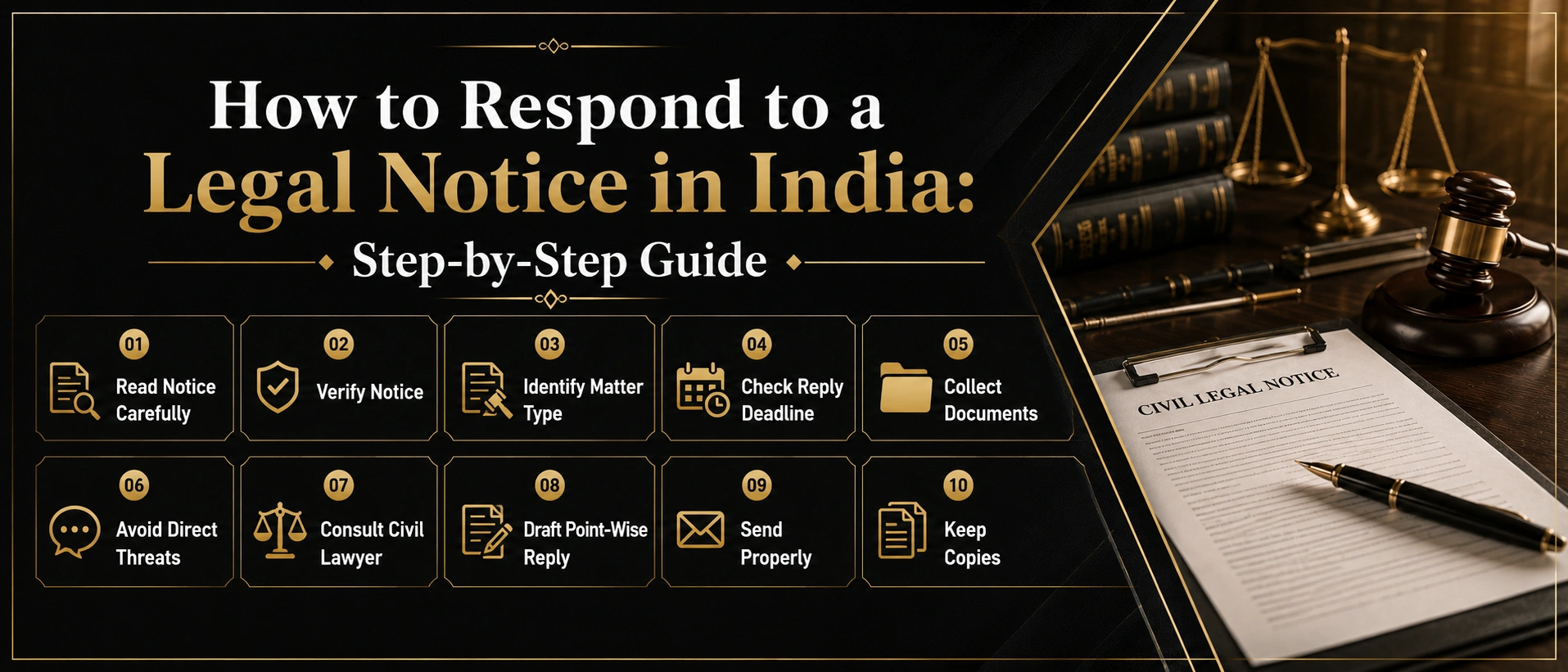
A proper reply to legal notice should be careful, factual, and professional. Do not reply in anger. Do not send a casual WhatsApp message. Follow a step-by-step process.
Step 1: Read the Legal Notice Carefully
Read the full notice slowly. Do not just read the first and last paragraph. Check these points:
- Who has sent the notice?
- Is it sent by an advocate?
- What is the dispute about?
- What are the allegations?
- What is the demand?
- What deadline is given?
- Are any documents attached?
- Is the notice sent by post, courier, email, or hand delivery?
Take notes while reading. This will help when you meet a lawyer.
Step 2: Check Whether the Notice Is Genuine
Sometimes people receive fake or poorly drafted notices. So, basic verification is important. Check:
- Advocate’s name and address
- Date of notice
- Name of sender
- Your correct name and address
- Signature
- Contact details
- Bar registration details, if mentioned
- Clear facts and demand
- Supporting documents
If anything looks doubtful, do not ignore it. Show it to a lawyer and verify.
Step 3: Identify the Type of Civil Matter
The reply depends on the type of dispute. For example:
- A money recovery legal notice needs payment records.
- A property dispute notice needs ownership papers.
- A rent notice needs lease agreement and rent receipts.
- A contract notice needs agreement and performance proof.
- A consumer dispute needs invoice and complaint records.
Do not use the same reply style for every matter. The facts and documents should decide the response.
Step 4: Note the Reply Deadline
Many legal notices mention a reply time such as 7, 15, 30, or 45 days.
There is no single fixed reply time for every private civil legal notice in India. The safer approach is to respond within the time mentioned in the notice or as advised by your lawyer. Legal commentary also notes that response timelines can depend on the type of notice, limitation issues, and the facts of the matter.
Do not wait till the last day. A delayed reply can create unnecessary pressure.
Step 5: Collect All Relevant Documents
Before drafting your legal notice reply, collect all proof related to the matter. Useful documents may include:
- Agreements
- Receipts
- Bank statements
- Payment screenshots
- UPI transaction records
- WhatsApp chats
- Emails
- Invoices
- Sale deed
- Rent agreement
- Property tax receipts
- Photos or videos
- Earlier letters or notices
- Any witness details
Do not hide documents from your lawyer, even if they look unfavorable. A lawyer needs full facts to protect you properly.
Step 6: Avoid Calling or Threatening the Sender

Keep communication formal and written. If settlement is possible, discuss it through your lawyer. Do not call the sender in anger. Avoid saying things like:
- “I will see you in court.”
- “I will not pay anything.”
- “Do whatever you want.”
- “Your notice is fake.”
Such statements may later be used against you.
Step 7: Consult a Civil Lawyer
For serious matters, do not draft the reply yourself. A wrong admission can harm your case. An experienced civil lawyer can help you understand:
- Whether the claim is valid
- Whether the notice is legally strong
- What documents support your side
- What should be denied
- What should be admitted
- Whether settlement is better
- Whether a counter-notice is needed
Step 8: Draft a Point-by-Point Reply
A good reply should answer the notice clearly. It should not be vague or emotional.
Manupatra explains that a legal notice reply generally follows a structured format similar to a notice, while also including details of the notice received and the nature of the response. Your reply should usually include:
- Reference to the received notice
- Your correct facts
- Point-wise response to allegations
- Denial of false claims
- Admission of true facts, if any
- Supporting documents
- Legal objections
- Settlement offer, if needed
- Final statement
The tone should be polite but firm.
Step 9: Send the Reply Through Proper Mode
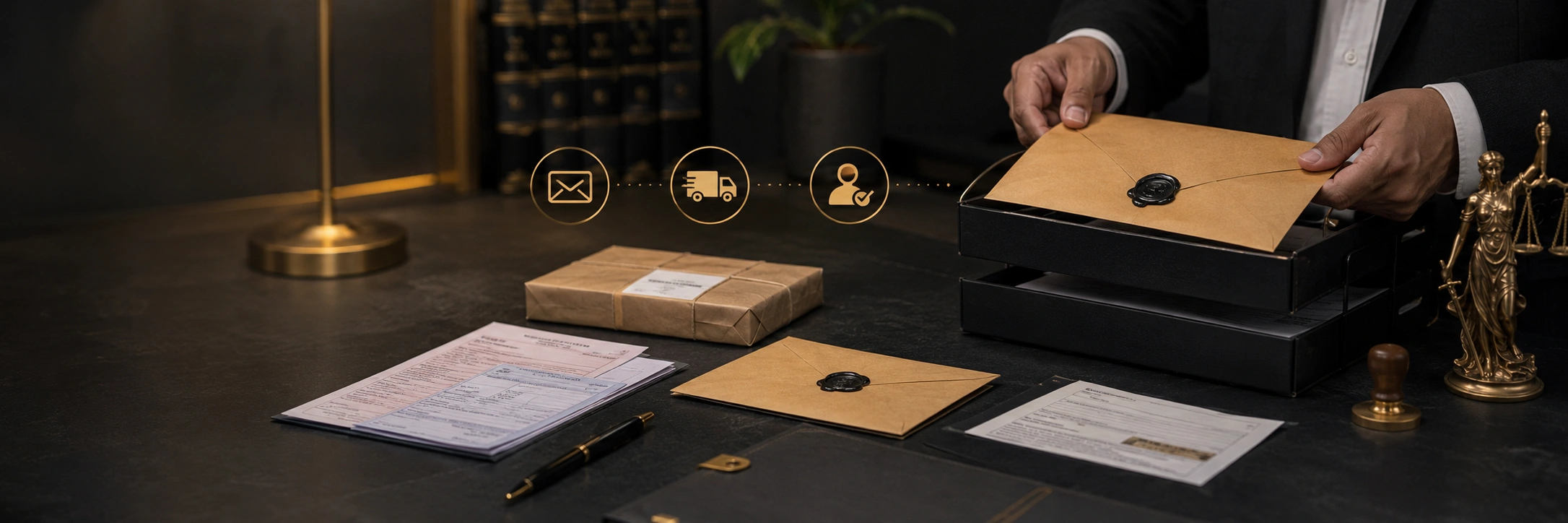
A reply should be sent in a way that creates proof of delivery. Common modes include:
- Registered post
- Speed post
- Courier
- Email, if suitable
- Advocate’s office dispatch
Keep postal receipts, tracking proof, delivery report, and a copy of the final reply.
Step 10: Keep Copies for Future Use
Keep a proper file. Save:
- Original legal notice
- Envelope, if received by post
- Your reply copy
- Postal receipt
- Tracking proof
- Delivery confirmation
- Documents shared
- Lawyer consultation notes
This record may help if the matter later goes to court.
Format of Reply to a Legal Notice
There is no one-size-fits-all format. The format depends on facts and dispute type. Still, a standard reply usually includes the following parts:
1. Sender and Receiver Details: Start with names, addresses, and contact details of both parties or their advocates.
2. Reference to the Original Legal Notice: Mention the date of the legal notice and when you received it.
Example: “This reply is being sent in response to your legal notice dated…”
3. Brief Facts of the Matter: State your version of events in simple and correct order. Keep it factual. Avoid emotional language.
4. Point-Wise Reply to Allegations: Reply to each major allegation. Use lines like:
- “The contents of paragraph 1 are denied.”
- “The claim made in paragraph 2 is false and incorrect.”
- “It is admitted only to the extent…”
- This makes your response clear.
5. Legal Objections, If Any: Your lawyer may add legal objections such as limitation, wrong facts, lack of documents, wrong party, or false claim.
6. Documents Supporting Your Side: Mention only useful documents. Do not attach unnecessary papers.
7. Final Demand, Denial, or Settlement Offer: Your reply may:
- Deny the claim
- Accept part of the claim
- Ask for withdrawal of false notice
- Offer settlement
- Demand apology or correction
- Warn against false litigation
8. Signature and Date: The reply should be signed by you or your advocate.
Special Case: Notice Under Section 80 CPC
Some legal notices are not ordinary private notices. One important example is a notice under Section 80 of the Code of Civil Procedure.
1. When Section 80 CPC Applies
Section 80 CPC applies when a person wants to file a civil suit against the Government or a public officer for acts done in official capacity. The Code of Civil Procedure states that such a suit generally cannot be instituted until after the required notice has been delivered, subject to exceptions for urgent or immediate relief.
2. Why Section 80 Notice Is Important
The purpose is to give the Government or public officer a chance to review the claim before litigation.
This can sometimes help resolve the matter without court proceedings.
3. Should You Reply to a Section 80 Notice?
If you are a government department, public officer, or concerned authority receiving such a notice, it should be reviewed carefully. The response should be handled legally and administratively.
What Happens After You Reply to a Legal Notice?
After your reply, several things can happen.
Matter May Be Settled: If both sides understand the issue, they may settle the dispute.
Sender May Withdraw the Notice: If your documents are strong, the opposite party may not continue.
Parties May Negotiate: Both parties may discuss payment, correction, refund, possession, or performance.
Mediation May Be Suggested: Civil disputes can sometimes be resolved through mediation. The Mediation Act, 2023 provides a legal framework for mediation, including pre-litigation mediation in certain situations.
Civil Suit May Still Be Filed: Even after your reply, the sender may file a case. Your reply can still help because it shows your side from the beginning.
Your Reply May Become Part of Court Record: If litigation starts, both sides may rely on notices and replies. That is why wording matters.
Case Study: Why a Proper Reply Matters in Property Disputes
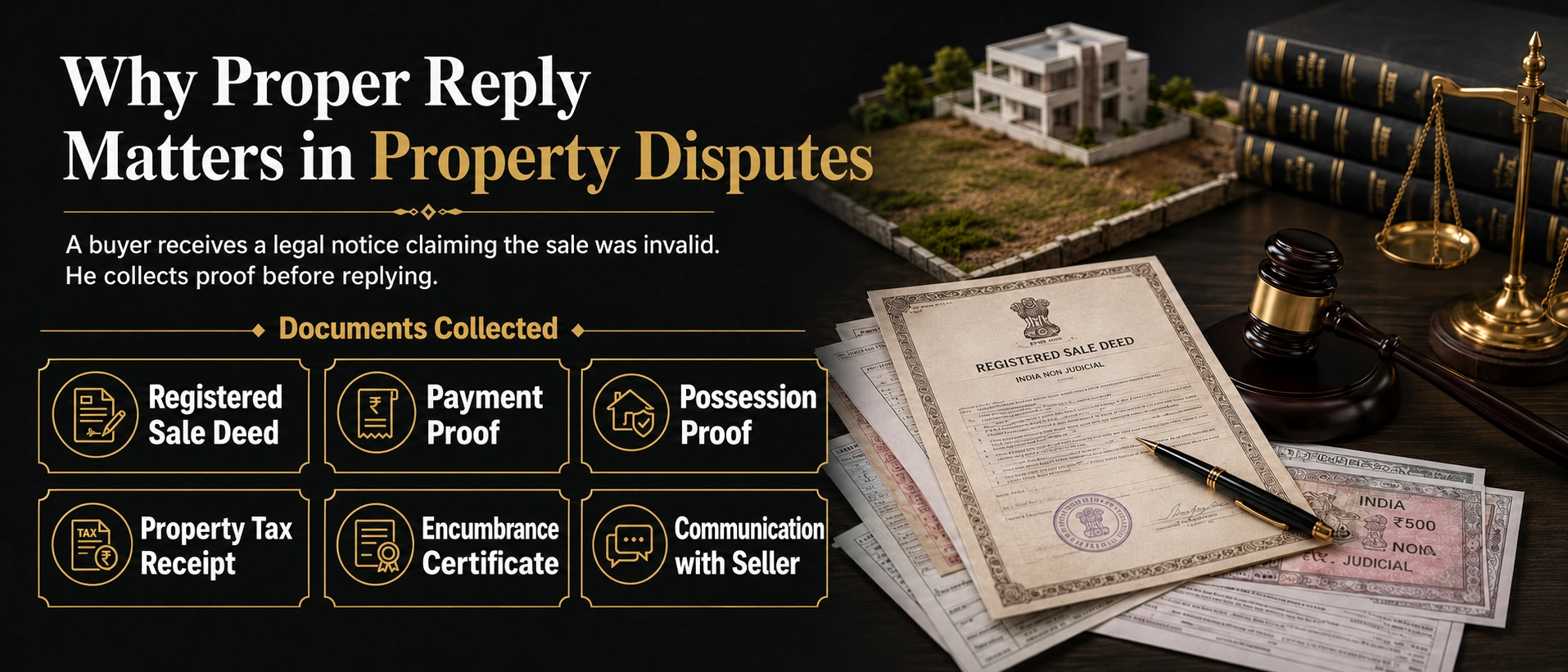
A buyer purchases a plot after paying the full amount. Later, a relative of the seller sends a legal notice claiming that the sale was invalid.
The buyer does not panic. He collects:
- Registered sale deed
- Payment proof
- Possession proof
- Property tax receipt
- Encumbrance Certificate
- Communication with seller
His lawyer sends a strong point-wise reply with supporting documents.
Result: the opposite party understands that the buyer has strong documents. The matter does not immediately turn into a serious court battle.
Learning: In property disputes, documents matter more than emotions.
Srinivas Law’s- Expert Tips to Respond Safely to a Legal Notice
- Reply Only After Checking Facts: Do not rely only on memory. Verify every point.
- Keep the Tone Polite but Firm: Your reply should not sound rude, weak, or emotional.
- Attach Only Necessary Documents: Do not share every document. Share only what is needed.
- Do Not Hide Important Facts from Your Lawyer: Even a small hidden fact can affect your case.
- Keep Delivery Proof: Save tracking receipts and email records.
- Explore Settlement If It Saves Time and Cost: Not every dispute needs a long court fight. Settlement can be smart when done safely.
Conclusion
Receiving a legal notice can feel scary, but the right response can protect your side. Read the notice carefully, understand the claims, collect proof, and consult a civil lawyer before replying. Do not ignore the notice, do not admit liability casually, and do not reply in anger.
A well-drafted reply can help you deny false claims, show your documents, explore settlement, and prepare your defence if the matter goes to court.
If you have received a civil legal notice for money, property, rent, contract, or business dispute, speak to an experienced civil lawyer before sending your response. A careful reply today can save you from bigger legal trouble tomorrow.

Advocate Vijay Kumar is the Founder and Principal Counsel of Srinivas Law House. With LLB and LLM qualifications, he is known for strategic litigation, strong courtroom advocacy, and delivering focused, transparent legal representation across diverse legal matters.