

For many families, purchasing a property is the most significant financial decision they will make. Be it a flat, plot, commercial space, resale property, or villa, the verification of documents is a crucial step that must be completed before any payments or registrations.
Property disputes often arise because buyers will trust verbal promises, company brochures, or statements made by the brokers without confirming the legal records. Just because a property that is marketed as perfect on the outside will be perfect on the inside, it does not mean that it is free of title issues. Property may be constricted on the land with tax and loan dues, illegal constructions that have family disputes and ownership problems, with no legal approvals.
Due to the abundance of issues that may arise after the purchase, a proper property documents checklist is a must for every buyer must be adhered to before any agreements are signed. This guide elaborates on the 10 documents that must be legally verified before the purchase of property, especially if the property is located in any of the metropolitan cities of India.
Why Property Document Verification Is Important
Property document verification protects the buyer from future legal and financial risks. A proper legal check helps confirm whether the seller has clear ownership and whether the property can be safely transferred.
Document verification helps you check the following:
- Real ownership of the property
- Chain of title
- Existing loans or legal claims
- Government approvals
- Construction legality
- Tax payment status
- RERA registration
- Occupancy status
- Seller identity
- Registration readiness
A property lawyer in Bangalore or your local city can help verify these documents before you pay a large booking amount.
1. Sale Deed
The sale deed is one of the most important legal documents before buying property. It proves the transfer of ownership from the seller to the buyer.
If you are buying a resale property, ask for the previous registered sale deed. If you are buying from a builder, the final sale deed will be executed at the time of registration.
Check these points in the sale deed:
- Name of buyer and seller
- Property description
- Survey number or flat number
- Built-up area or plot area
- Sale consideration
- Registration details
- Seller’s right to sell
- Signature and stamp duty details
- Sub-registrar office details
Never rely only on photocopies. Ask for original or certified copies and have them verified by an experienced property lawyer before proceeding with the transaction.
2. Title Deed and Ownership Records
The title deed confirms whether the seller has legal ownership over the property. Clear title means the seller has the right to sell the property without dispute.
A title verification for property should check the following:
- Whether the seller is the real owner
- Whether ownership is clear and marketable
- Whether the property is inherited, gifted, purchased, or developed
- Whether there are any missing links in ownership
- Whether any legal dispute exists
- Whether all co-owners have agreed to sell
If the property belongs to multiple family members, all legal owners must sign the sale documents. If one owner is missing, the transaction can become risky.
3. Mother Deed or Chain of Documents
The mother deed shows the history of ownership. It helps trace how the property moved from one owner to another over the years.
For example, the ownership chain may include:
- Original land grant
- Partition deed
- Gift deed
- Sale deed
- Release deed
- Settlement deed
- Will or inheritance documents
- Conversion order, if applicable
A clear chain of documents is very important in property due diligence in India. If one link is missing, the buyer should not ignore it. Missing ownership history can create title problems later.
4. Encumbrance Certificate
An encumbrance certificate, also called EC, shows whether the property has registered financial or legal liabilities. It helps check whether the property is mortgaged, sold earlier, gifted, or involved in registered transactions.
An EC may help reveal:
- Existing bank loan
- Mortgage details
- Registered sale transactions
- Gift or release deeds
- Court attachment, if registered
- Other registered charges
In Karnataka, buyers usually check EC through the Kaveri portal or sub-registrar office. For safer property verification, check EC for a long period, commonly 13 to 30 years, depending on the property history.
A clean EC does not replace full title verification, but it is a very important document before buying property.
5. Khata Certificate, Mutation, and Revenue Records
Khata or mutation records show that the property is recorded in the local municipal or revenue authority’s records. In Bangalore, buyers often check BBMP/GBA khata, e-khata, or related property records depending on the location.
Khata and mutation records are important for the following:
- Property tax payment
- Municipal records
- Building plan approval
- Utility connection
- Ownership record update
- Future sale and loan processing
For plots and land, buyers may also need RTC, pahani, mutation extract, survey records, and conversion records. For apartments, the khata certificate and khata extract should match the property details.
Do not treat a khata as proof of perfect title. It supports municipal record verification, but ownership still depends on title documents.
6. Property Tax Receipts and Utility Bills
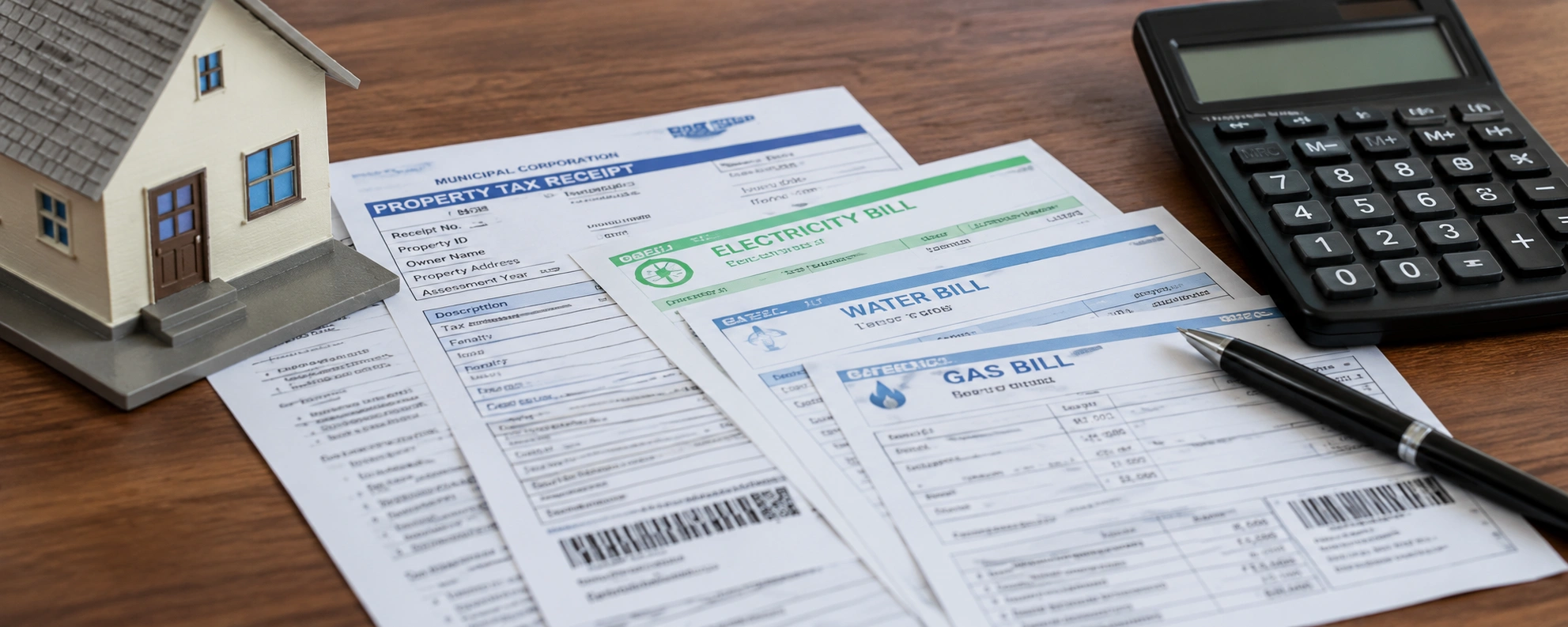
Before buying property, check whether property tax is paid up to date. Pending tax dues may become the buyer’s problem after purchase.
Ask for:
- Latest property tax receipt
- Earlier tax payment receipts
- Electricity bills
- Water bills
- Maintenance dues statement
- Association dues clearance
- Betterment charges receipt, if applicable
For apartments, also ask the apartment association or builder for a no-dues confirmation. For independent houses and plots, check municipal tax records directly where possible.
This is one of the simplest but most ignored property verification documents.
7. Approved Building Plan and Layout Approval
If you are buying a flat, villa, or constructed property, check the approved building plan. If you are buying a plot, check layout approval.
The approved plan confirms whether the construction or layout has permission from the correct authority.
Depending on location, approval may come from the following:
- BBMP/GBA
- BDA
- BMRDA
- Local planning authority
- Municipal corporation
- Gram panchayat, where applicable
- DTCP or town planning authority
Check whether the actual construction matches the approved plan. Extra floors, illegal extensions, setback violations, or unapproved deviations can create future problems during resale, loan, or occupancy.
8. Occupancy Certificate and Completion Certificate
An occupancy certificate, also called OC, confirms that the building is fit for occupation and has been constructed as per approved rules. A completion certificate, also called CC, confirms that construction has been completed according to sanctioned plans.
For ready-to-move apartments, OC is very important. Without OC, buyers may face issues related to the following:
- Legal possession
- Water and electricity connections
- Home loan processing
- Resale
- Apartment association handover
- Municipal compliance
- Future regularization concerns
Before taking possession, ask for OC and CC from the builder. If the builder says OC is “under process,” take legal advice before making final payment.
9. RERA Registration and Project Details
If you are buying an under-construction project or a newly launched apartment, verify the project on the state RERA website. In Karnataka, buyers can check project details on the Karnataka RERA portal.
RERA verification helps you check:
- Project registration number
- Promoter details
- Approved plans
- Project completion date
- Land details
- Legal approvals
- Ongoing complaints, if visible
- Project status
- Registered agreement details
For under-construction property, RERA registration is one of the most important checks. Also remember that for applicable RERA projects, the promoter should not collect more than 10% of the property cost before entering into a written registered agreement for sale.
10. NOCs, Agreement for Sale, and Seller Identity Documents
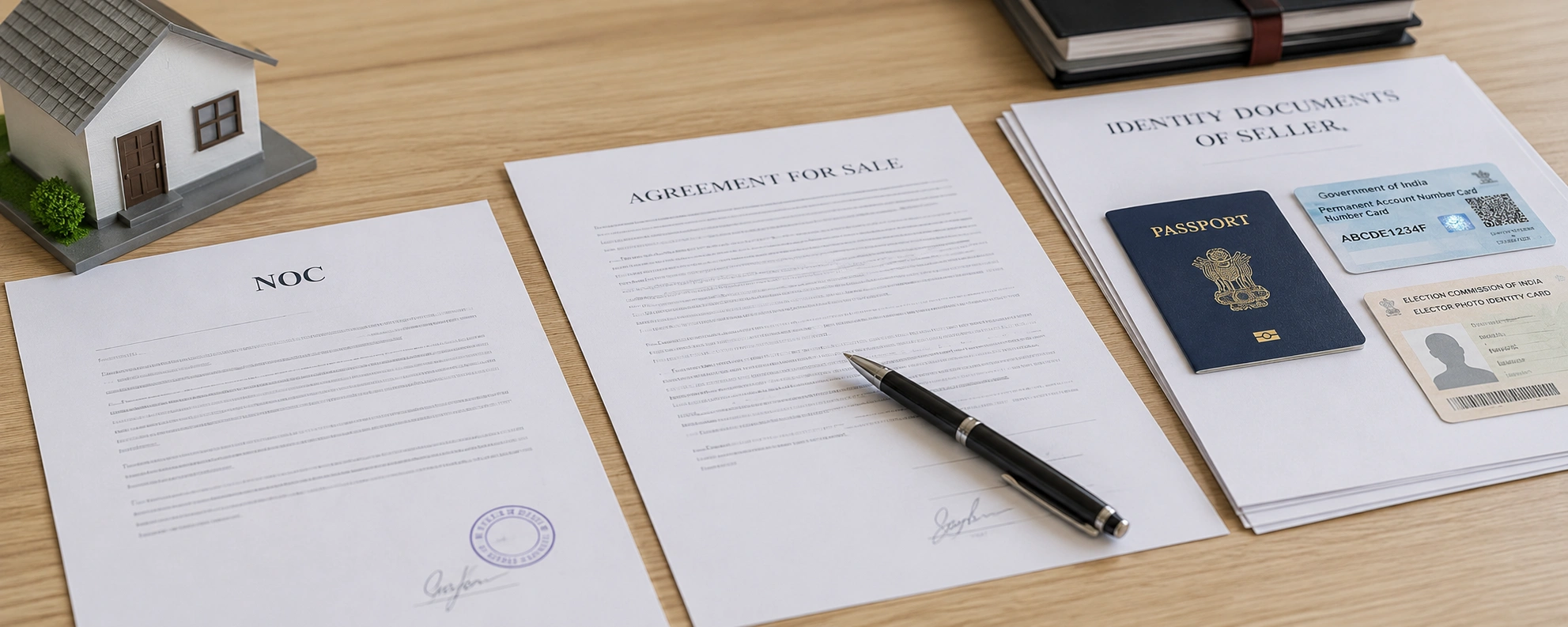
Before finalizing a property purchase, check required NOCs, the agreement for sale, and the seller’s identity documents.
Important NOCs may include:
- Bank loan closure NOC
- Society NOC
- Builder NOC
- Landowner NOC, if applicable
- Legal heir consent
- Electricity and water dues clearance
- Fire NOC, where applicable
- Environmental clearance, for larger projects
Also verify seller identity documents such as PAN, Aadhaar, passport, company authorization, board resolution, or power of attorney, depending on the seller type.
The agreement for sale should clearly mention:
- Total sale value
- Payment schedule
- Property details
- Possession date
- Default clause
- Refund terms
- Registration timeline
- Documents to be provided
- Liability for pending dues
- Dispute resolution clause
Do not sign a vague agreement or pay a large amount without legal review.
Also Read: What Is a Civil Dispute? Types, Examples & When You Need a Lawyer in India
Extra Checks for Buying Property in Bangalore
If you are buying property in Bangalore, document verification should be more detailed because properties may fall under BBMP/GBA, BDA, BMRDA, village panchayat, revenue land, converted land, or apartment projects.
Important Bangalore-specific checks include:
- BBMP/GBA khata or e-khata
- A-khata or B-khata status, where relevant
- BDA or BMRDA layout approval
- Land conversion order
- RTC and mutation records for land
- EC from Kaveri portal
- Tax-paid receipt
- Approved building plan
- OC and CC
- RERA registration for applicable projects
- Association no-dues certificate
- Betterment charges, if applicable
For Bangalore buyers, consulting a property lawyer before agreement and registration is strongly recommended.
Common Mistakes Buyers Should Avoid
Avoid these mistakes before buying property:
- Paying token money without a document check
- Trusting only broker or builder promises
- Not checking EC
- Ignoring khata or mutation records
- Buying without OC in ready apartments
- Not verifying RERA details
- Signing an agreement without legal review
- Ignoring loan or mortgage dues
- Not checking co-owner consent
- Not verifying property tax payments
A small mistake before purchase can become a long legal dispute later.
Final Thoughts
Real estate is a high-value purchase, so impulsivity is ill-advised. Prior to payment or contract signing, make sure you examine several key documents. For security while purchasing property, you should check the sale deed, title deed, mother deed, encumbrance certificate, khata, tax receipts, the approved plan, OC, CC, RERA, NOCs, and the seller’s identification documents.
An appealing property may be a tempting buy; however, the only way to guarantee the safety of a purchase is with legal verification. It is best to take the advice of a property lawyer or a legal verification team if you have any doubts.

Advocate Vijay Kumar is the Founder and Principal Counsel of Srinivas Law House. With LLB and LLM qualifications, he is known for strategic litigation, strong courtroom advocacy, and delivering focused, transparent legal representation across diverse legal matters.