


The police come to your house and inform that you have been arrested. Now you need some clarifications about what is going to happen further. Should you demand a warrant? Are you allowed to talk to a lawyer before making any statement? What details should be verified before signing the document of arrest?
An arrest in India does not mean that one is guilty. Both the Indian Constitution and the Bharatiya Nagarik Suraksha Sanhita, 2023 provide for safeguards of rights in the process of arrest and custody. But the use of rights is relevant only if one knows his/her rights.
What Are the First 5 Things You Should Do After Being Arrested?
If police arrest you in India, stay calm, ask why you are being arrested, check the arrest memo, inform someone you trust and request legal assistance. These five actions can help protect your legal position before the case reaches court.
1. Stay Calm and Avoid Resisting Arrest
An arrest can be very scary if you don’t have enough knowledge about it and especially when it happens in front of family members or colleagues. However, pushing an officer, trying to escape, or refusing lawful instructions can create further problems.
Stay calm and cooperate with the arrest procedure. You can still ask questions, request legal assistance and raise concerns about unlawful conduct. Remember, cooperating with an arrest does not mean admitting guilt.
2. Ask the Police Why You Are Being Arrested
Under Article 22(1) of the Constitution, an arrested person has the right to know the grounds of arrest. BNSS Section 47 also requires officers making arrests without a warrant to communicate the relevant grounds.
Ask which offence is alleged and why your arrest is necessary. If officers are acting under a warrant, request to see it. These details help your lawyer assess whether the police followed the correct procedure and what legal remedies may be available.
3. Check the Arrest Memo Before Signing
Under BNSS Section 36, police must display clear identification and prepare an arrest memo with the required witness attestation and your countersignature. Before signing, check the information recorded, particularly the date, time and place of arrest.
If something is incorrect, point it out and ask for the correction. Inform your lawyer about any disagreement. Don’t sign blank or unread papers. However, don’t assume that refusing to sign every document will stop the arrest. An arrest memo is part of the legal procedure and any dispute about its contents should be properly recorded.
4. Ask the Police to Inform Your Family
BNSS Section 48 requires the police to inform a relative, friend, or another person nominated by you about your arrest and place of custody.
Give officers a reliable contact number and ask them to complete the notification. Your family should know where you are being held so they can contact an advocate, gather relevant documents and follow the case.
5. Contact a Criminal Lawyer Before Discussing the Allegations
You have the legal right to be represented by a lawyer. According to section 38 of the BNSS, you have the right to meet your attorney while being interrogated, but not throughout the whole process. You also have protection against compelled self-incrimination under Article 20(3).
This does not give you permission to provide false information or ignore every lawful requirement. However, you should avoid making admissions, guessing answers, or discussing allegations without understanding their legal consequences.
What Are the Legal Rights of an Arrested Person in India?
The rights of an arrested person in India extend beyond the arrest itself. They protect personal liberty, medical needs, access to legal advice and timely judicial oversight.
Legal Right | What It Protects |
Against self-incrimination | Protection from compelled self-incriminating testimony |
Legal assistance | Access to an advocate and applicable free legal aid |
Medical examination | Documentation of injuries and health concerns |
Protection from unlawful force | Safeguards against unnecessary restraint and abuse |
Judicial oversight | Timely production before a Magistrate |
Medical Examination and Protection During Custody
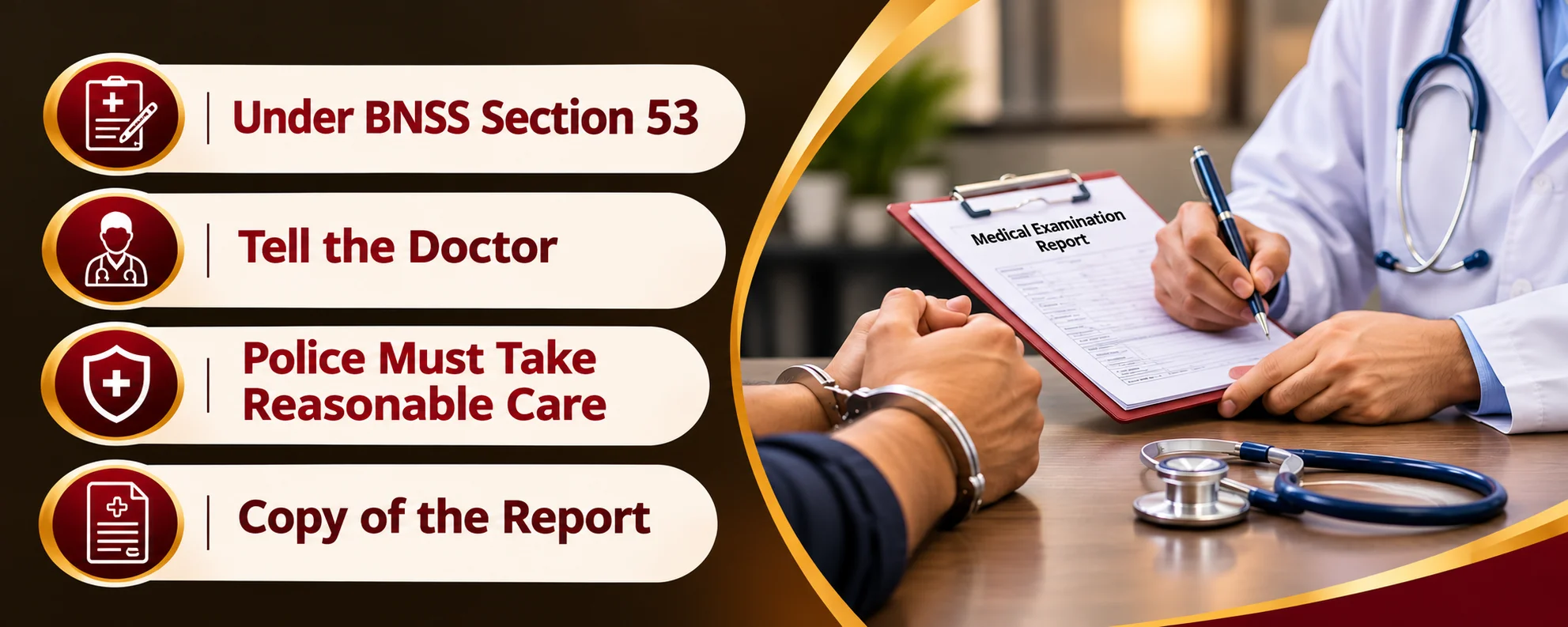
Under BNSS Section 53, an arrested person must undergo a medical examination soon after arrest. The examination records injuries or marks of violence and a copy of the report must be provided to the arrested person or their nominated person.
Tell the doctor about existing injuries, pain, medication, or any health condition requiring attention. Police must also take reasonable care of the arrested person’s health and safety under Section 56.
Can Police Handcuff an Arrested Person?
Handcuffing is not automatically permitted in every arrest. BNSS Section 43(3) allows it in specified circumstances, including certain serious offences, repeat offenders and people who have escaped custody.
Therefore, the police must consider the legal conditions and the nature of the case. Being accused of an offence does not, by itself, justify every form of restraint.
What Happens When You Are Produced Before a Magistrate?
Your first court appearance is one of the most important stages after arrest. Under Article 22(2) and the applicable BNSS provisions, an arrested person must generally be produced before the nearest Magistrate within 24 hours, excluding necessary travel time and subject to constitutional exceptions. However, the first appearance is more than a requirement to meet a deadline.
Your First Court Appearance Matters
When you appear before the Magistrate, your lawyer can raise important questions about the arrest and continued detention.
- Was the arrest lawful? The court can examine relevant legal requirements and the basis for continued custody.
- Have you received legal assistance? Tell your lawyer if you have been unable to obtain advice or representation.
- Were you injured or threatened? Inform the Magistrate about any allegations of unlawful treatment and request appropriate medical or legal protection.
- Can you seek bail? Depending on the offence, your advocate may seek release or oppose further custody.
The Magistrate may consider bail or authorise detention according to law. Importantly, the 24-hour rule does not mean automatic release after 24 hours. Further custody may continue when legally authorised.
How Can You Seek Bail After an Arrest in India?
Bail allows an accused person to leave custody under specified conditions while the criminal case continues. The procedure depends on whether the alleged offence is bailable or non-bailable.
Bail in Bailable Offences
For bailable offences, release on bail is generally a legal right when the statutory requirements are satisfied. Under BNSS Section 478, the person may be released after executing the required bond or bail bond.
In appropriate cases, the law also allows release on a personal bond without sureties. Ask your lawyer whether the alleged offence is bailable and what conditions apply. You may not need to wait for a lengthy court hearing in every bailable case.
Bail in Non-Bailable Offences
A non-bailable offence does not mean release is impossible. However, bail depends on the applicable law and the facts of the case. A lawyer can review the allegations, available records, seriousness of the offence and other relevant factors before seeking bail.
BNSS Section 480 governs certain bail decisions in non-bailable cases. Sessions Courts and High Courts also have powers under the applicable provisions. The outcome cannot be guaranteed. A strong application requires accurate facts and a proper understanding of the charges.
What Mistakes Should You Avoid After Being Arrested?
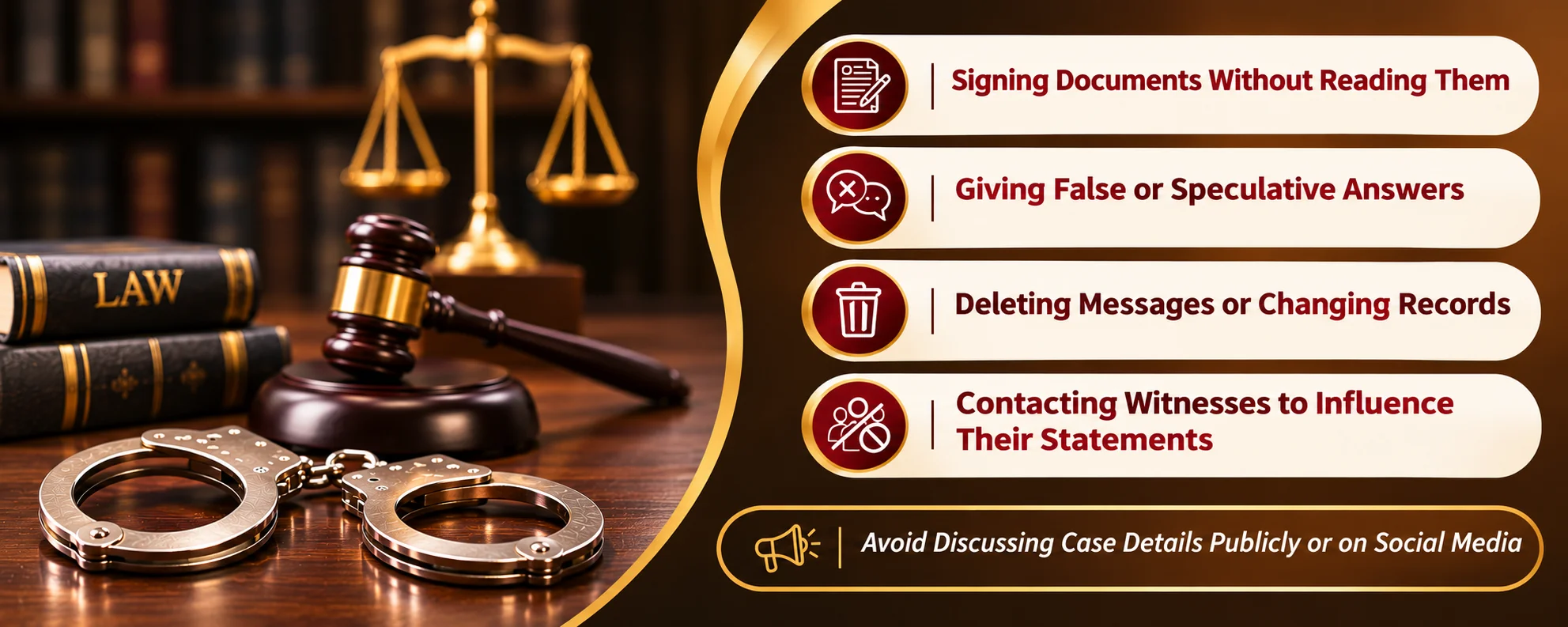
An arrest can lead people to make rushed decisions. Some mistakes may create legal difficulties beyond the original allegations.
- Signing documents without reading them: Check what you are signing. If a document contains incorrect information, raise the issue and seek legal advice.
- Giving false or speculative answers: Don’t invent explanations because you’re nervous or want questioning to end. Incorrect statements can complicate your defence.
- Deleting messages or changing records: Avoid destroying or altering material connected to the investigation. Preserve relevant communications and documents.
- Contacting witnesses to influence their statements: Trying to pressure someone can create additional legal problems and affect bail proceedings.
Also, avoid discussing sensitive case details publicly or on social media without advice. Your priority should be lawful cooperation and protecting your legal position, not trying to resolve the entire case during the arrest.
What Should Your Family Do Immediately After Your Arrest?
Family members can provide valuable support, particularly when the arrested person cannot manage calls or documents. First, confirm the police station and note the arrest time. Ask for the officer’s name and details of the alleged offence.
Next, contact an experienced criminal advocate and lawyer for legal guidance, and share any available notices, FIR details, or arrest documents to help them assess the case and advise on the appropriate legal steps. If bail is possible, the lawyer may need identity records, address details and information about suitable sureties.
Keep a written record of important calls, visits and court dates. However, avoid interfering with witnesses or the investigation.
What if the family cannot afford a lawyer?
Under the Legal Services Authorities Act, persons in custody are eligible for free legal aid. Families can approach the District Legal Services Authority or request assistance through the court. Having reliable information and timely legal support is far more useful than relying on rumours about the arrest.

Advocate Vijay Kumar is the Founder and Principal Counsel of Srinivas Law House. With LLB and LLM qualifications, he is known for strategic litigation, strong courtroom advocacy, and delivering focused, transparent legal representation across diverse legal matters.